

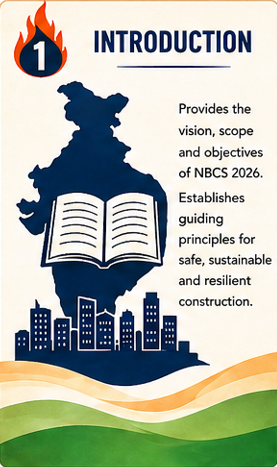
1. Introduction to NBCS 2026
The National Building Construction Standards (NBCS) 2026 is the latest revision of India's building code, developed by the Bureau of Indian Standards (BIS). It replaces earlier versions from 1970, 1983, 2005, and 2016 with a more modern, performance-based approach to construction and safety.
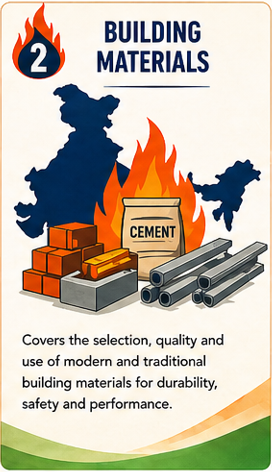
2. Why NBCS 2026 Was Introduced
Rapid urbanization, infrastructure growth, and technological advancements demanded updated construction guidelines. The new code reflects changing socio-economic conditions, increasing building complexity, and the need for resilient infrastructure.
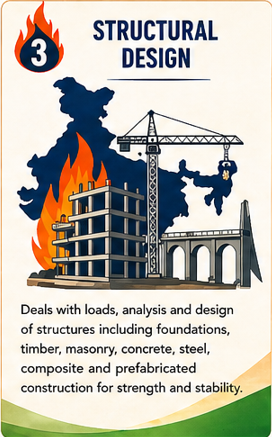
3. Shift from Prescriptive to Performance-Based Approach
NBCS 2026 moves away from rigid rules to a performance-oriented framework, allowing flexibility, innovation, and better decision-making in building design and construction.
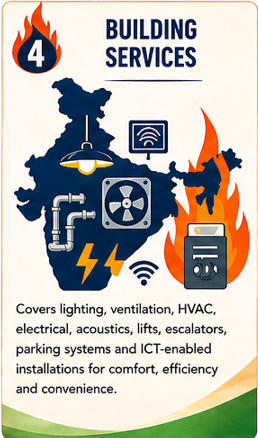
4. Structure of NBCS 2026
The code is divided into six key parts:
- Part A: Introduction
- Part B: Building Materials
- Part C: Structural Design
- Part D: Building Services
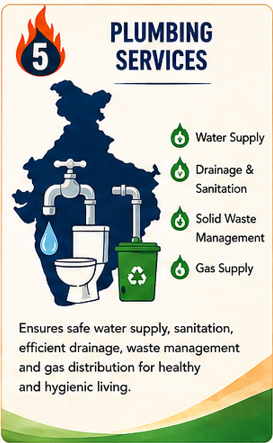
- Part E: Plumbing Services
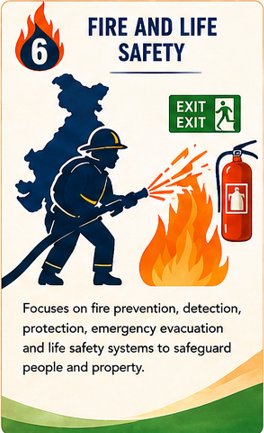
- Part F: Fire and Life Safety
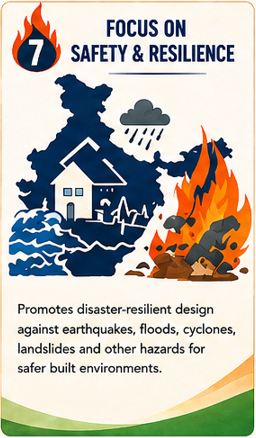
5. Focus on Structural Safety and Resilience
The standards emphasize resilience against natural disasters such as earthquakes, floods, cyclones, and landslides, ensuring safer buildings and long-term durability.
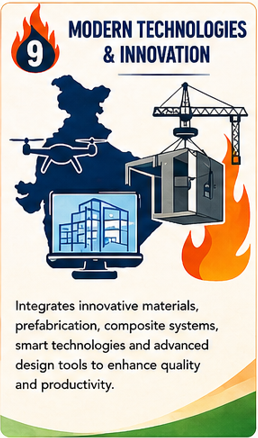
6. Inclusion of Modern Construction Technologies
NBCS 2026 integrates:
- Innovative building materials
- Prefabrication techniques
- Composite construction methods
- Advanced glazing systems, including blast-resistant glass
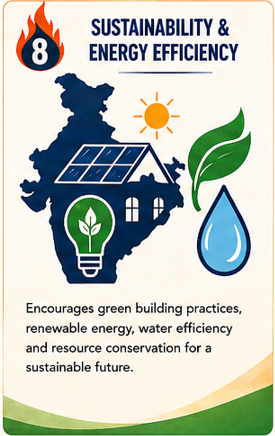
7. Sustainability and Energy Efficiency
The code promotes sustainable construction practices such as:
- Rooftop solar PV systems
- Building-integrated photovoltaics (BIPV)
- Energy-efficient systems
- Water-efficient fixtures and waste management
8. Enhanced Building Services and Infrastructure
Modern infrastructure needs are addressed through:
- EV charging infrastructure
- Smart building services
- Improved ventilation, lighting, and HVAC systems
- Advanced communication-enabled installations
9. Fire and Life Safety as a Core Component
Fire safety is given high priority with comprehensive provisions for fire prevention, emergency evacuation, and life safety systems. This ensures occupant safety across all building types.
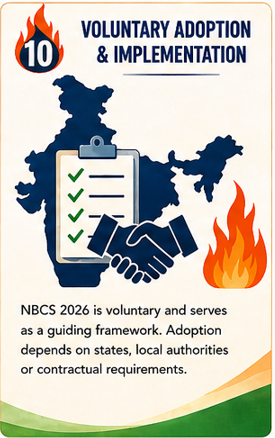
10. Voluntary Adoption and Implementation
NBCS 2026 is non-binding and serves as a guiding framework. Its implementation depends on adoption by state governments, local authorities, or contractual requirements.
Conclusion
NBCS 2026 represents a major step forward in India's construction ecosystem, combining safety, sustainability, innovation, and flexibility. It lays the foundation for smarter, safer, and future-ready infrastructure.